Introduction
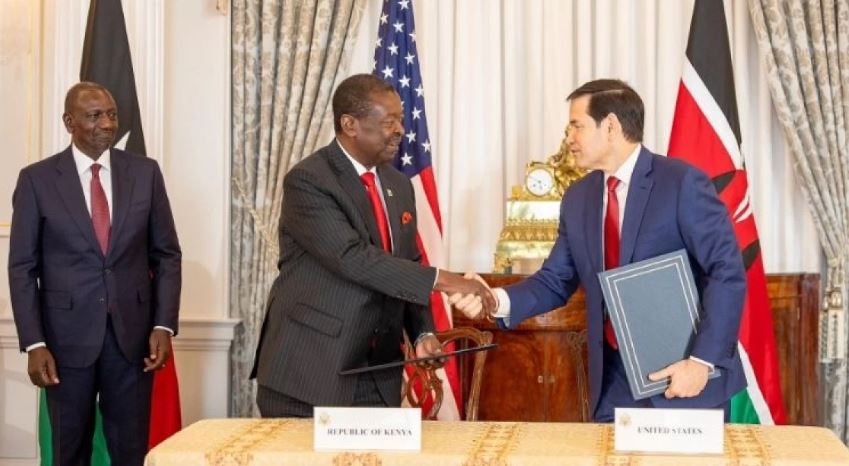
On 4 December 2025, Kenya and the United States signed a Health Cooperation Framework worth up to 2.5 billion USD. The United States pledged up to 1.6 billion USD while Kenya committed to about 850 million USD through increased domestic investment. The plan focuses on improving public hospitals, expanding digital health services, strengthening the supply of medicines and building a more reliable health system for all Kenyans.
This agreement will influence how health services are delivered across the country, how public money is spent and how health data is handled. Because health data involves deeply personal information, every Kenyan has a stake in how it is governed, shared and protected.
This blog provides a simple, well-structured analysis of the Kenya–U.S. $2.5 billion health cooperation framework and its implications for data governance, privacy and national sovereignty.
What the Kenya–U.S. Health Cooperation Framework Means for Kenya
The Kenyan government views the agreement as aligned with its long-term policies. Vision 2030, the Universal Health Coverage (UHC) programme and the National Digital Health Agency Strategic Plan all prioritise stronger public hospitals, a reliable medical supply chain, an expanded health workforce and a unified digital health system. The new framework puts money directly into the institutions responsible for achieving those goals. This avoids the old problem of donor-funded projects running on parallel systems that never strengthen the public sector.
Kenyans could see very practical benefits. County hospitals may get new equipment. Supply disruptions for essential medicines may reduce. Digital records may replace paper files, making referrals and follow-ups easier. Disease outbreaks may be detected and responded to more quickly. Whether these gains materialise will depend on how effectively Kenyan institutions manage the funds, enforce accountability and upgrade both physical and digital infrastructure.
U.S. Interests in the $2.5B Health Partnership
The United States is not acting purely out of charity. Its interests are clear and openly stated.
Stronger global health security
When Kenya improves surveillance, laboratory systems and outbreak response, it reduces the risk of diseases spreading internationally. This protects the United States and its global interests.
2. Stability and diplomacy.
Supporting Kenya’s health sector strengthens political ties and signals long-term partnership. This increases U.S. influence in a region where global powers are competing for strategic relationships.
3. Commercial and technological influence.
When Kenya invests in digital health systems, pharmaceuticals and medical supply chains, American companies often become natural suppliers, partners or technical advisors. That creates economic opportunities.
4. Reliable long-term outcomes.
Shifting from NGO-led projects to government-managed systems increases sustainability, which benefits both sides. The United States wants to invest in structures that continue working even after donor cycles shift.
The arrangement serves Kenyan interests and U.S. interests at the same time. Recognising this balance does not diminish the value of the cooperation. It simply reflects how global health partnerships actually work.
Why The Shift From NGO Funding To Government Funding Matters
For many years, most U.S. health funding in Kenya flowed through large international NGOs. These NGOs controlled staff, budgets, procurement and implementation. They produced results, but the approach created a side effect. Government capacity remained underdeveloped because the core functions were outsourced.
Under the new model, funds move directly into Kenyan public institutions such as the Ministry of Health, the Kenya Medical Supplies Authority and the Digital Health Agency. This shift gives Kenya more control in very specific ways.
Control over national priorities
Kenya can decide which counties receive equipment first, which digital systems matter most and which services should be scaled nationwide. These decisions are made locally and not in foreign project offices.
2. Control over procurement and supply chains
Kenyan institutions can negotiate with suppliers, oversee procurement plans and build long-term systems that do not collapse when donor contracts end.
3. Control over staffing
Health workers can be hired into permanent public roles, which strengthens the workforce instead of relying on project-based employment by NGOs.
4. Control over long-term sustainability
Funds flowing through government systems strengthen national budgeting, digital infrastructure and public accountability. These systems remain even after the donor exits.
Does the Deal Involve Sharing Kenya’s Health Data?
The simple answer is “Yes”. The framework includes a Data Sharing Agreement (DSA). Kenyan officials have already confirmed that data shared under this agreement will be de-identified or aggregated. This means the information cannot be linked to a specific person. The goal is to support joint planning, disease surveillance and tracking of public health outcomes.
Why is data sharing needed at all?
Because public health planning relies on accurate data patterns. If both countries can see trends in disease prevalence, immunisation coverage, stock-outs or outbreak signals, they can coordinate responses more effectively. For example, early detection of malaria resistance or unusual respiratory infections requires shared analysis across laboratories and surveillance teams.
The key point is that identifiable personal data is not required for this type of cooperation. Aggregate data is enough for planning, forecasting and evaluation.
Kenyan Laws That Govern Health Data
Two key laws guide how health data is handled in Kenya.
1. The Data Protection Act (DPA) 2019
This law treats health information as sensitive personal data. It cannot be shared with any external party unless one of the following applies:
the person has given consent
the sharing is required for a public health purpose
the data is de-identified and cannot identify anyone
the law requires disclosure
the disclosure is necessary to prevent serious harm